GEORGE HARRISON
UN PROJECT
GEORGE HARRISON
UN PROJECT

THE INSPIRATION

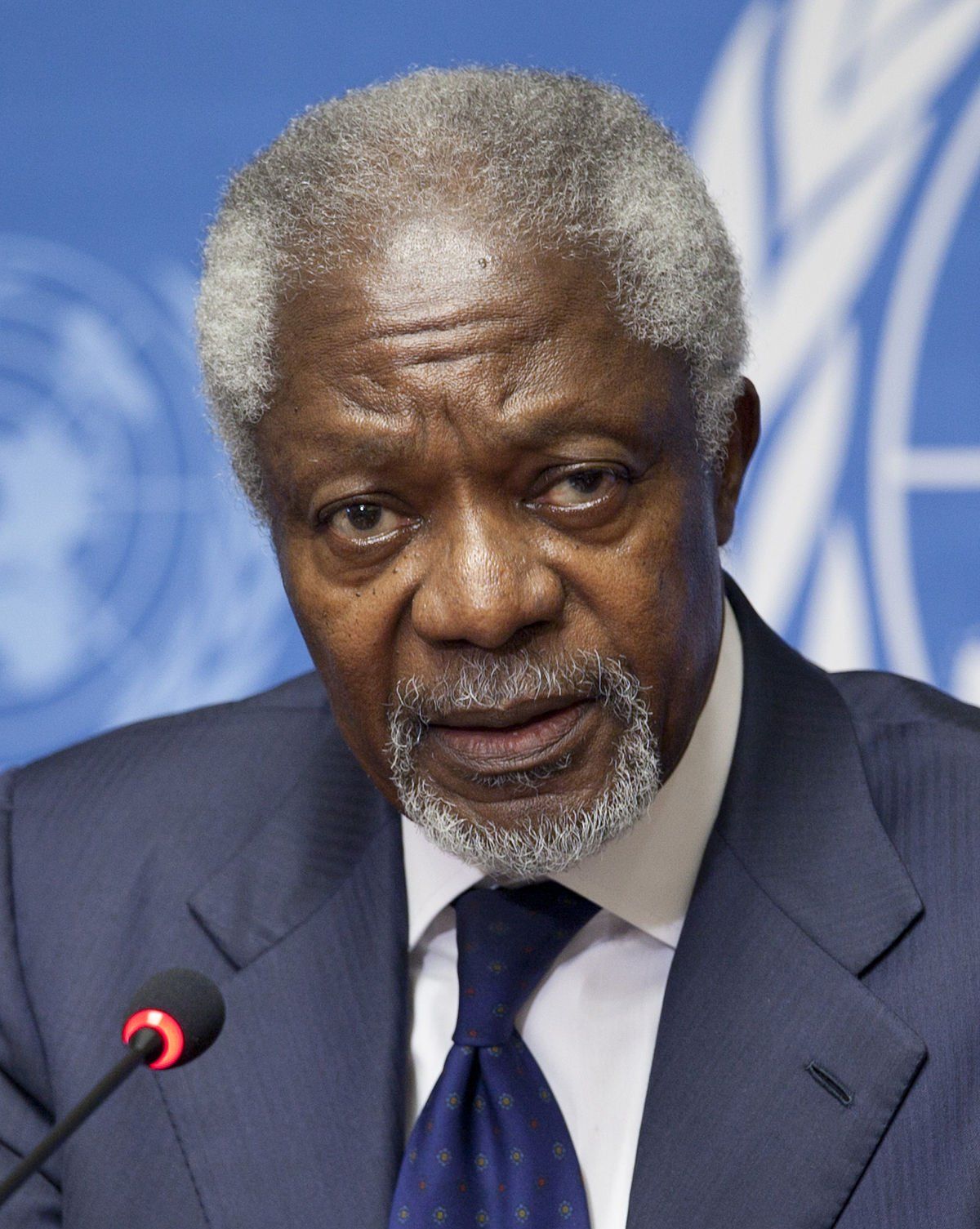
In early 2001, David Clark listened intently as United Nations Secretary-General Kofi Annan spoke about a critical challenge facing the UN: inspiring global engagement around its initiatives. Intrigued, Clark set out to explore how the UN activated its campaigns in partnership with its 193 Member States. What he discovered was a cumbersome reality: for any annual observance to be established, unanimous agreement among all Member States was required - an often insurmountable hurdle. And when these observances were finally created, the UN rarely capitalized on their potential, seldom promoting them as part of its own agenda.

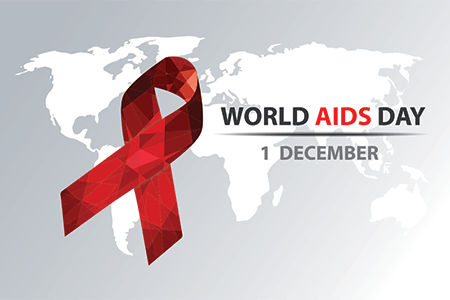
World AIDS Day, marked each December 1st, served as a telling example. While AIDS organizations around the world rallied around this observance to fuel their campaigns, raise funds, and generate awareness, they rarely credited the UN’s foundational role. The absence of UN recognition in these global movements struck Clark as a profound missed opportunity for raising awareness of the UN's ongoing work and for positioning itself as a vital force in these global issues.

“What if the UN could communicate like a brand?” Clark pondered. “What if it linked itself to these observances in an authentic, unforgettable way - since they created them.” In his view, this could be a transformative approach, offering the UN a powerful platform to inspire global participation and reignite public interest in its essential missions.

THE INSPIRATION

In early 2001, David Clark listened intently as United Nations Secretary-General Kofi Annan spoke about a critical challenge facing the UN: inspiring global engagement around its initiatives. Intrigued, Clark set out to explore how the UN activated its campaigns in partnership with its 193 Member States. What he discovered was a cumbersome reality: for any annual observance to be established, unanimous agreement among all Member States was required - an often insurmountable hurdle. And when these observances were finally created, the UN rarely capitalized on their potential, seldom promoting them as part of its own agenda.

World AIDS Day, marked each December 1st, served as a telling example. While AIDS organizations around the world rallied around this observance to fuel their campaigns, raise funds, and generate awareness, they rarely credited the UN’s foundational role. The absence of UN recognition in these global movements struck Clark as a profound missed opportunity for raising awareness of the UN's ongoing work and for positioning itself as a vital force in these global issues.

“What if the UN could communicate like a brand?” Clark pondered. “What if it linked itself to these observances in an authentic, unforgettable way - since they created them.” In his view, this could be a transformative approach, offering the UN a powerful platform to inspire global participation and reignite public interest in its essential missions.

THE INSPIRATION

In early 2001, David Clark listened intently as United Nations Secretary-General Kofi Annan spoke about a critical challenge facing the UN: inspiring global engagement around its initiatives. Intrigued, Clark set out to explore how the UN activated its campaigns in partnership with its 193 Member States. What he discovered was a cumbersome reality: for any annual observance to be established, unanimous agreement among all Member States was required - an often insurmountable hurdle. And when these observances were finally created, the UN rarely capitalized on their potential, seldom promoting them as part of its own agenda.

World AIDS Day, marked each December 1st, served as a telling example. While AIDS organizations around the world rallied around this observance to fuel their campaigns, raise funds, and generate awareness, they rarely credited the UN’s foundational role. The absence of UN recognition in these global movements struck Clark as a profound missed opportunity for raising awareness of the UN's ongoing work and for positioning itself as a vital force in these global issues.

“What if the UN could communicate like a brand?” Clark pondered. “What if it linked itself to these observances in an authentic, unforgettable way - since they created them.” In his view, this could be a transformative approach, offering the UN a powerful platform to inspire global participation and reignite public interest in its essential missions.

THE PROJECT

In January 2001, David Clark approached the United Nations Fund for International Partnerships, the agency dedicated to building alliances between the UN and the private sector. In their first meeting, the UN team was drawn to Clark’s vision of "the UN reclaiming their days" - revitalizing key UN observances - and invited him to focus on their foremost priority in 2001: global anti-poverty initiatives.

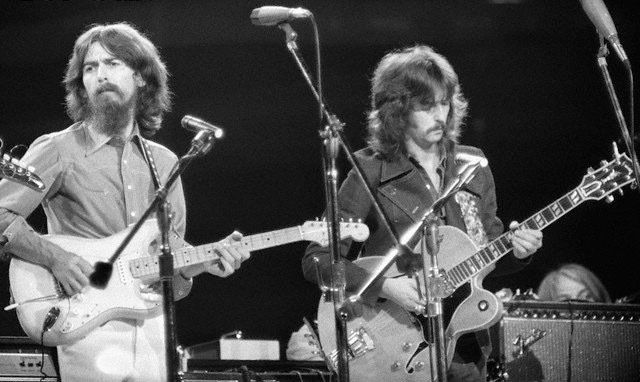
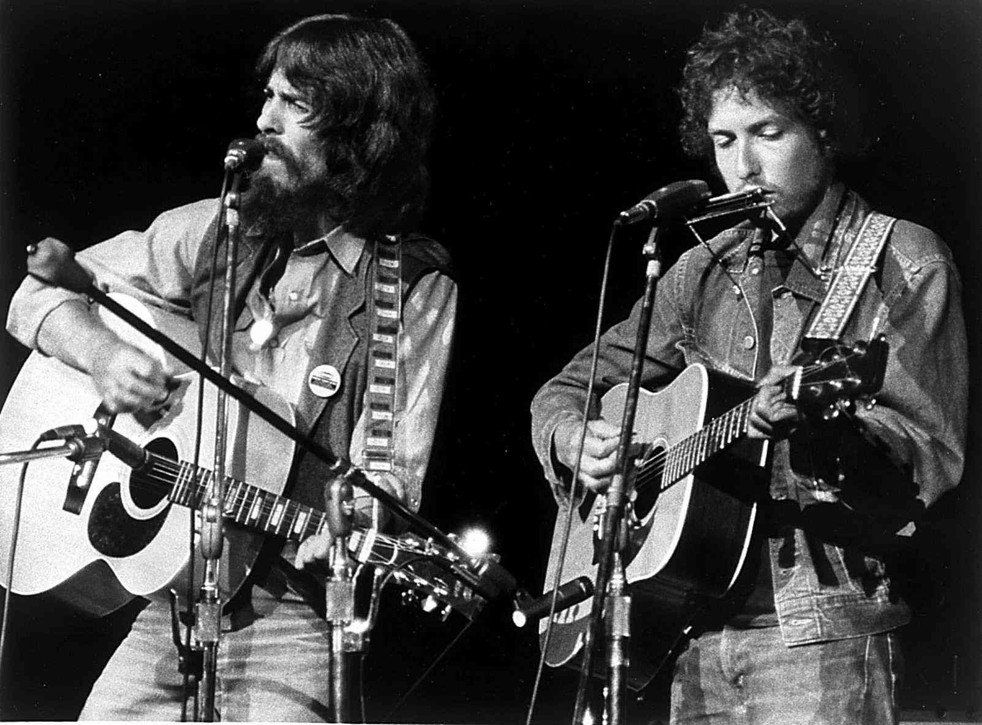
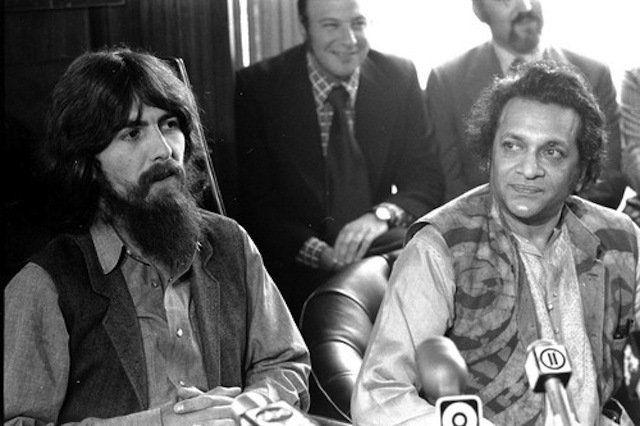
Clark and the UN team honed in on a prime opportunity: the UN’s International Day for the Eradication of Poverty, or “World Poverty Day.” With that date as a beacon, Clark set out to find a compelling historical or cultural tie that could capture the world’s imagination. His search led him to a poignant precedent from 1971, when Bangladesh faced severe poverty. Musician Ravi Shankar, determined to raise awareness, reached out to his friend George Harrison, and together, they organized “The Concert for Bangladesh.” This legendary benefit at Madison Square Garden, featuring stars like Ringo Starr, Eric Clapton, Bob Dylan, Billy Preston, and Leon Russell, raised millions for the poor of Bangladesh through a UN Agency - UNICEF, and became an enduring symbol of music for social change.

The connection sparked an idea for Clark. What if, on the 30th anniversary of The Concert for Bangladesh, a new concert could be staged on World Poverty Day—this time, with the backing of all 193 UN Member States?

The UN embraced Clark’s vision, and he helped draft a letter that began, “Dear Mr. Harrison, on behalf of our 193 Member States, we call upon you once again…” Moved by the UN’s call, George Harrison graciously accepted. Together with Clark, he became co-executive producer of the concert, while the famed Bill Graham Presents, took on the monumental task of producing and promoting the event at Madison Square Garden.

The concert stood as a testament to the power of collaboration and a reminder of the UN’s role in championing humanity’s most urgent causes.

THE PROJECT

In January 2001, David Clark approached the United Nations Fund for International Partnerships, the agency dedicated to building alliances between the UN and the private sector. In their first meeting, the UN team was drawn to Clark’s vision of "the UN reclaiming their days" - revitalizing key UN observances - and invited him to focus on their foremost priority in 2001: global anti-poverty initiatives.

Clark and the UN team honed in on a prime opportunity: the UN’s International Day for the Eradication of Poverty, or “World Poverty Day.” With that date as a beacon, Clark set out to find a compelling historical or cultural tie that could capture the world’s imagination. His search led him to a poignant precedent from 1971, when Bangladesh faced severe poverty. Musician Ravi Shankar, determined to raise awareness, reached out to his friend George Harrison, and together, they organized “The Concert for Bangladesh.” This legendary benefit at Madison Square Garden, featuring stars like Ringo Starr, Eric Clapton, Bob Dylan, Billy Preston, and Leon Russell, raised millions for the poor of Bangladesh through a UN Agency - UNICEF, and became an enduring symbol of music for social change.

The connection sparked an idea for Clark. What if, on the 30th anniversary of The Concert for Bangladesh, a new concert could be staged on World Poverty Day—this time, with the backing of all 193 UN Member States?

The UN embraced Clark’s vision, and he helped draft a letter that began, “Dear Mr. Harrison, on behalf of our 193 Member States, we call upon you once again…” Moved by the UN’s call, George Harrison graciously accepted. Together with Clark, he became co-executive producer of the concert, while the famed Bill Graham Presents, took on the monumental task of producing and promoting the event at Madison Square Garden.

The concert stood as a testament to the power of collaboration and a reminder of the UN’s role in championing humanity’s most urgent causes.

THE PROJECT

In January 2001, David Clark approached the United Nations Fund for International Partnerships, the agency dedicated to building alliances between the UN and the private sector. In their first meeting, the UN team was drawn to Clark’s vision of "the UN reclaiming their days" - revitalizing key UN observances - and invited him to focus on their foremost priority in 2001: global anti-poverty initiatives.

Clark and the UN team honed in on a prime opportunity: the UN’s International Day for the Eradication of Poverty, or “World Poverty Day.” With that date as a beacon, Clark set out to find a compelling historical or cultural tie that could capture the world’s imagination. His search led him to a poignant precedent from 1971, when Bangladesh faced severe poverty. Musician Ravi Shankar, determined to raise awareness, reached out to his friend George Harrison, and together, they organized “The Concert for Bangladesh.” This legendary benefit at Madison Square Garden, featuring stars like Ringo Starr, Eric Clapton, Bob Dylan, Billy Preston, and Leon Russell, raised millions for the poor of Bangladesh through a UN Agency - UNICEF, and became an enduring symbol of music for social change.

The connection sparked an idea for Clark. What if, on the 30th anniversary of The Concert for Bangladesh, a new concert could be staged on World Poverty Day—this time, with the backing of all 193 UN Member States?

The UN embraced Clark’s vision, and he helped draft a letter that began, “Dear Mr. Harrison, on behalf of our 193 Member States, we call upon you once again…” Moved by the UN’s call, George Harrison graciously accepted. Together with Clark, he became co-executive producer of the concert, while the famed Bill Graham Presents, took on the monumental task of producing and promoting the event at Madison Square Garden.

The concert stood as a testament to the power of collaboration and a reminder of the UN’s role in championing humanity’s most urgent causes.
ENDINGS & BEGINNINGS

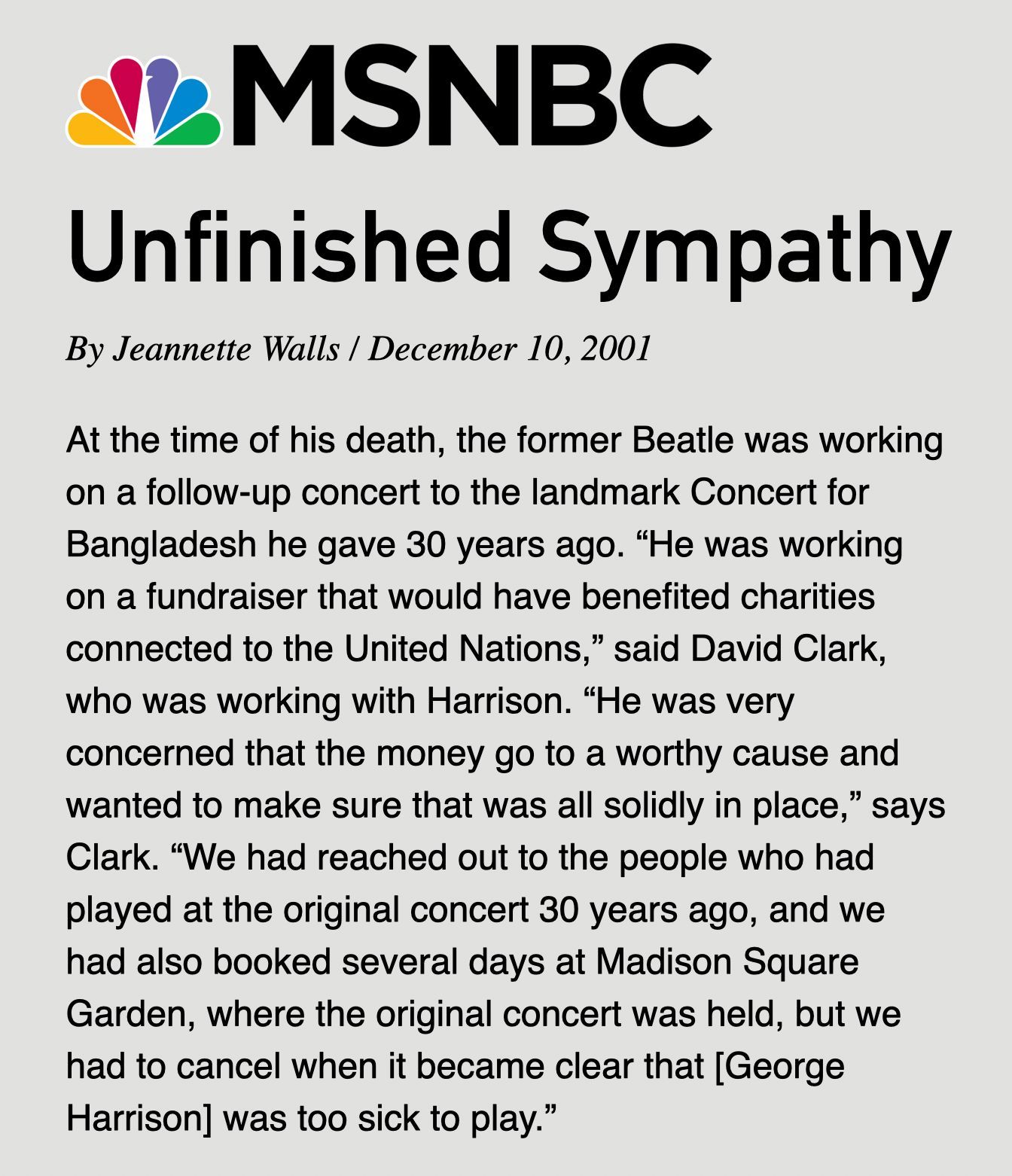
The event, however, would never come to pass. As the team poured over concert logistics in the spring of 2001, George Harrison, the legendary musician whose life and music had inspired millions, received a grave diagnosis that would change the course of the project. A man whose talent, compassion, and vision had once bridged the worlds of art and activism, Harrison’s own health had begun to fail. Plans were quietly paused, and the idea of a triumphant return to Madison Square Garden was put on hold. Just months later, on November 29, 2001, Harrison succumbed to his illness, leaving behind not only a rich musical legacy but a dream unfulfilled.

Though this ambitious project was never realized, its echoes lingered in the halls of the United Nations. For the UN, Harrison’s willingness to rekindle the spirit of the Concert for Bangladesh represented something rare and deeply aspirational: a moment where global diplomacy could intersect with cultural icons, where music and meaning might unite the world in shared purpose. David Clark’s vision - encouraging the UN to embrace the power of brand storytelling - marked a shift, illuminating how global observances could be harnessed to elevate the UN’s mission.

This early effort seeded a lasting relationship between Clark and the UN, who saw in his approach a refreshing angle on public engagement. Clark remains closely connected with the UN, continuing to explore new avenues to inspire collective action on the world’s most pressing issues. The project’s legacy endures as a testament to the intersection of art, diplomacy, and the enduring human desire to build a better world.

ENDINGS AND BEGINNINGS

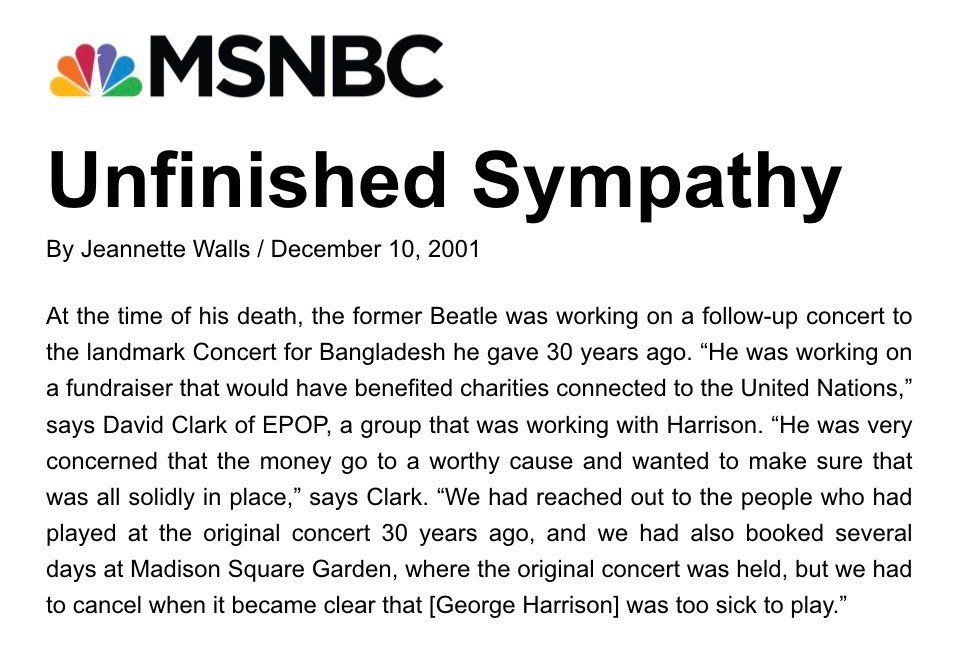
Unfortunately, the event never came to fruition. During planning for the event in the Spring of 2001, Mr. Harrison became ill and the project was put on hold. George Harrison passed away in November 2001.


While this project was never fully realized, it demonstrated the power of thinking like a brand to the United Nations. They understood Clark’s vision, and through this initial effort, Clark maintains a strong relationship with the UN to this day.

ENDINGS AND BEGINNINGS

Unfortunately, the event never came to fruition. During planning for the event in the Spring of 2001, Mr. Harrison became ill and the project was put on hold. George Harrison passed away in November 2001.

While this project was never fully realized, it demonstrated the power of thinking like a brand to the United Nations. They understood Clark’s vision, and through this initial effort, Clark maintains a strong relationship with the UN to this day.

SUPPORTERS

CONTACT
CONTACT
© Copyright 2020 / David Clark Cause, Inc.